
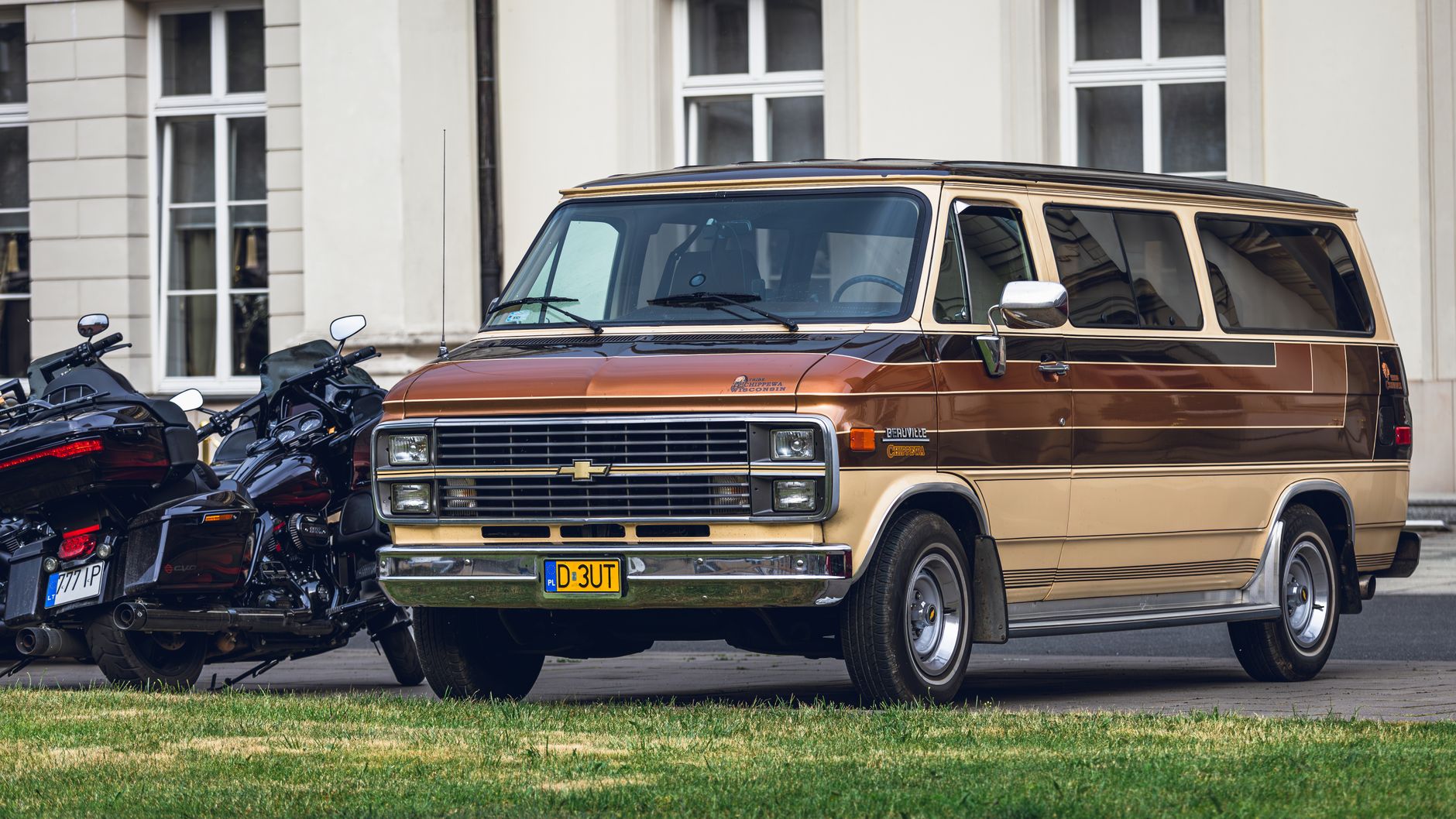
Wars, high fuel prices and rampant inflation defined much of the 1980s — and the automotive world responded with a strange mix of bold experiments, half‑baked compromises and genuinely clever ideas that most people have long since forgotten. Some of these cars were too ahead of their time. Others were simply in the wrong market at the wrong moment. A few were just odd. Here are several of the decade’s most interesting lost models.
Offbeat beginnings: the Brat and the Alfa that almost wasn’t
The Subaru BRAT first appeared in 1977 but hit its stride in the 1980s. It was a rugged, cheap little pickup with jump seats in the bed — a gimmick that helped it avoid import tariffs on trucks. Ronald Reagan kept one on his California ranch for 20 years. Subaru marketed it in America as “Fun on Wheels,” and with 100,000 units sold worldwide, the Brat cemented the company’s reputation for reliability and set it up for later U.S. success.
Meanwhile, Alfa Romeo had grand plans for a big sedan called the Alfa 6. It was supposed to launch in 1973, but the oil crisis killed that idea cold. Executives shelved the project until the late 1970s, when fuel prices had settled. By then the car looked dated. Its carburetted 2.5‑liter V6 was a lovely engine yet drank fuel even by 1979 standards. A 1983 revision added fuel injection and a turbodiesel, but the damage was done. Production ended in 1987 after roughly 12,000 units.
Related: Ferrari 296 Speciale Navigates Le Mans Parade Chaos
When partnerships went sideways
Corporate tie‑ups produced some of the decade’s strangest cars. The Plymouth Sapporo was a Mitsubishi built under Chrysler’s contract. It came with bucket seats with lumbar support, tinted glass, power mirrors and a claimed 40 mpg. About 70,000 buyers took one home. Then Mitsubishi started selling its own version, the Conquest, and the Sapporo faded from memory.
An even more ambitious joint venture birthed the Chrysler TC by Maserati. Chrysler and De Tomaso (which owned Maserati) agreed to build a flagship sports car. The plan: Chrysler would use Maserati’s prestige to take on the best two‑doors in America. Assembly happened in Milan. The TC could be had with a 2.2‑liter four‑cylinder with a Cosworth‑designed 16‑valve head or a Mitsubishi V6. But the car never quite worked. The manufacturer imported about 7,300 before pulling the plug. In hindsight, using a true Maserati engine might have made the difference.
Lincoln tried a different gambit. In the early 1980s, Mercedes‑Benz was selling every diesel it could land in the United States. Cadillac had already jumped on the bandwagon, with mixed results. So Lincoln decided to offer a diesel option for its Continental. For the 1984 model year, buyers could choose a 2.4‑liter turbodiesel straight‑six built by BMW — the same engine that powered the 524td. Lincoln charged about $1,235 for the German unit. As it turned out, Mercedes buyers didn’t want a Lincoln and Lincoln buyers didn’t want a diesel. The option disappeared after 1985.
For enthusiasts who track down these cars today, the reward is often a glimpse of what might have been. The Subaru BRAT is now a quirky collectible; the Alfa 6 a rare curiosity. The Chrysler TC remains a footnote that still puzzles collectors. None of them defined the decade the way a Ferrari Testarossa or a Porsche 911 did, but they tell a more honest story about how car companies actually operated.
Related: Groveland Air Conditioner Repairs: Room Air Conditioning Unit
Sports cars that nobody bought
Not all forgotten 1980s cars were strange sedans or trucks. The Stevens Cipher debuted in 1980, when most manufacturers were abandoning the sports car market for fear of U.S. regulations. Professor Anthony Stevens designed a light, compact two‑seater with a glass‑fibre body and an 850 cc Reliant engine. Autocar’s Steve Cropley praised it, and the Cipher helped inspire the Mazda MX‑5. Yet Stevens couldn’t raise the money for production. Only seven were ever built.
The MVS Venturi looked like a Renault Alpine A610 but was an independent project from Manufacture de Voitures de Sport. It used a mid‑mounted Renault V6 in 260‑ and 302‑horsepower forms. Performance was strong, but the handling wasn’t in the same league as that of a Porsche 911 — which cost almost exactly the same. Made from 1984 to 1994, it never became the Ferrari rival its creators hoped for.
Then there’s the Pontiac Fiero, perhaps the best‑known failure on this list. It was the most European of American sports cars, with a mid‑mounted four‑cylinder engine and rust‑proof plastic body panels. Cost cutting meant it didn’t drive well, and oil leaks onto the exhaust manifold caused fires. A recall followed. Pontiac spent $30 million trying to save it for a second generation, but sales halved between 1986 and 1987. After 370,000 units, the Fiero was axed.
The UVA F33 Can‑Am was even rarer. Pre‑dating the Ariel Atom by more than a decade, this minimalist machine used a mid‑mounted Rover V8 and had bare‑bones bodywork over a chassis inspired by sand‑rail buggies. It offered supercar pace when it launched in 1986. Only a dozen buyers stepped forward.
Related: Old Ford Fiesta proves its worth
Oddballs and one‑offs
The AMC Eagle Kammback was a niche within a niche: a compact car with an interchangeable four‑wheel‑drive system. To switch modes the owner had to stop at the side of the road. These days you need a BMW M5 to get that kind of drivetrain flexibility. Sales hit 34,000 the first year, then fell sharply. Like many niche vehicles, it only became interesting once it was gone.
The Volvo 780 was a genuine exotic. Volvo turned to Italian coachbuilder Bertone to transform the 760 into a coupe. It wore sharp, sporty lines and came with leather, wood trim and a choice of V6, turbodiesel or turbocharged four‑cylinder engines. Volvo pegs total output at 8,518 cars; some claim it was closer to 10,000. Production ended in 1990, and it wasn’t replaced until the first‑generation C70 arrived in 1996 — without Bertone’s help.
The Dodge Dakota Sport Convertible deserves a mention simply for existing. It was a pickup truck with a manual soft top. Buyers reacted with confusion: “Wait, what?” followed by “Why?” It never spawned competition from Ford or Chevrolet, and it didn’t last long. But it remains one of the most unique pickups of the 1980s, a decade that never lacked for strange ideas.