
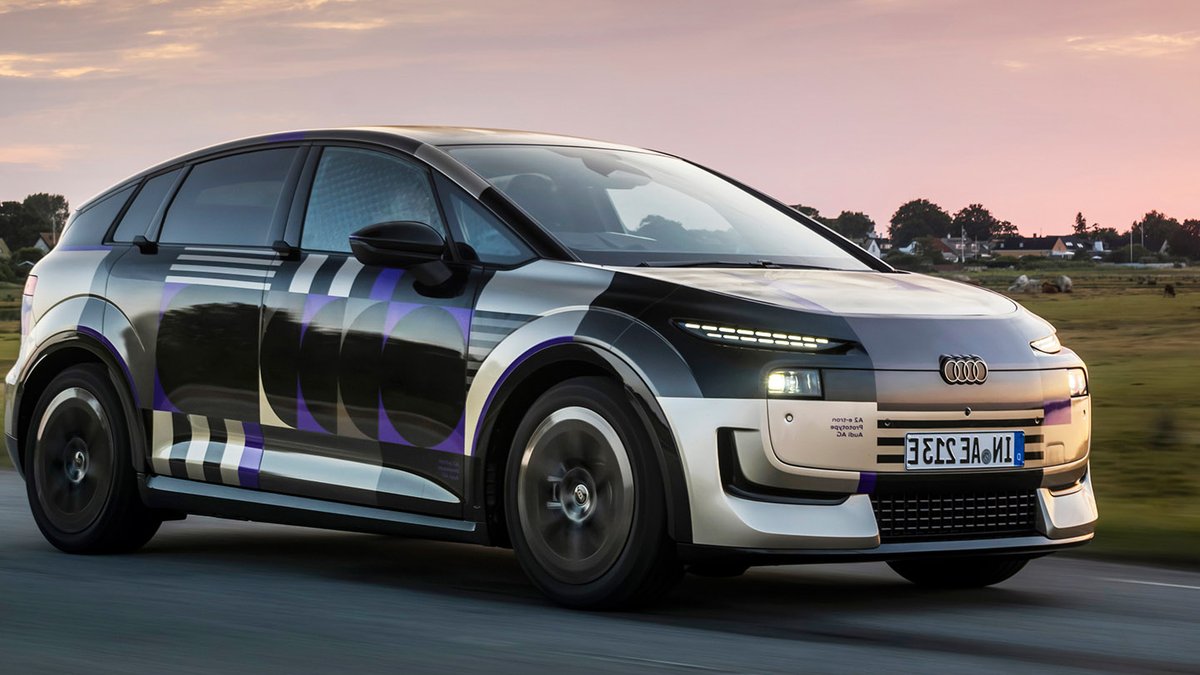
The Audi A2’s return to the market has generated significant interest, particularly among those who remember the original model’s innovative design and engineering. The A2 has become a cult classic due to its uncompromising approach to creating a spacious and fuel‑efficient small hatchback. With its aluminium spaceframe and radical aerodynamics, the A2 stood out from its competitors, but its popularity was limited during its initial release. The new A2 E‑tron, on the other hand, is set to make a bigger impact, thanks to its optimized aerodynamic design and relatively small battery.
Audi’s approach to the new A2 E‑tron was not to create a retro‑style car, but rather to design an electric vehicle that is smaller than the Q4 E‑tron and as aerodynamic as possible. The result is a hatchback shape that is optimized for airflow, with a short, bluff front end and a monolithic body. The teardrop shape, cut off at the end for practicality, and the split rear window are all designed to maximize rear visibility and reduce air resistance. The A2 E‑tron is based on the Volkswagen Group MEB platform, which provides a range of upgrades, including a more efficient electric motor and a lithium‑iron‑phosphate battery option.
Table of Contents
A2 History and Significance
The original A2’s innovative design and engineering had a significant impact on the automotive industry. Its use of an aluminium spaceframe and radical aerodynamics created a new standard for small hatchbacks. The A2’s spacious interior and fuel‑efficient design made it an attractive option for those looking for a practical and environmentally friendly vehicle. Although it was not a commercial success during its initial release, the A2 has become a cult classic, with many enthusiasts appreciating its unique design and engineering. The A2’s influence can still be seen in modern vehicle design, with many manufacturers incorporating similar aerodynamic and lightweight materials into their vehicles.
The A2’s significance extends beyond its design and engineering. It represented a new approach to vehicle manufacturing, one that prioritized efficiency and sustainability. The A2’s use of recycled materials and its focus on reducing waste and emissions made it a pioneer in the field of eco‑friendly vehicles. As the automotive industry continues to evolve, the A2’s legacy serves as a reminder of the importance of innovation and sustainability in vehicle design. With the new A2 E‑tron, Audi is building on this legacy, creating a vehicle that is not only efficient and sustainable but also stylish and desirable.
Design and Aerodynamics
The new A2 E‑tron’s aerodynamic features are designed to optimize airflow and reduce air resistance. The vehicle’s shape, with its short, bluff front end and monolithic body, is designed to minimize the amount of air that is forced to change direction, reducing drag and improving efficiency. The A2 E‑tron’s aerodynamic design is similar to that of other electric vehicles, such as the Volkswagen ID 3, but its unique shape and features set it apart from its competitors. For more information on electric vehicles and their design, visit the official EPA website.
Technical Specifications and Upgrades
The new Audi A2 E‑tron rides on the latest iteration of the Volkswagen Group’s MEB platform, a modular architecture designed from the ground up for electric vehicles. This foundation brings several key improvements over earlier versions, particularly in battery chemistry and motor efficiency. The mid‑range battery option now uses lithium‑iron‑phosphate (LFP) cells, a shift from the more common nickel‑manganese‑cobalt (NMC) chemistry. LFP batteries are less energy‑dense but far more durable, tolerating frequent full charges without degradation—a practical advantage for urban drivers who plug in daily. Audi claims this change also reduces reliance on rare materials, though the trade‑off is a slight increase in weight.
Related: User Blocked by Social Media Platform
At the heart of the A2 E‑tron’s powertrain is the new APP350 electric motor, a synchronous unit developed in‑house by Volkswagen Group. Its efficiency gains come from several refinements: thinner electrical steel laminations to reduce eddy current losses, a separate oil pan to minimize drag in the gearbox, and a lower‑viscosity lubricant that flows more freely at cold temperatures. The motor is described as highly efficient for its class, focusing on range and refinement rather than outright acceleration.
The MEB platform’s flexibility allows for a compact wheelbase while still accommodating a generous cargo area, reflecting the original A2’s space‑efficient design. Regenerative braking is adjustable via paddles behind the steering wheel, with settings ranging from mild coasting to aggressive one‑pedal driving. Audi has also integrated an advanced electrical architecture that supports faster DC charging at compatible stations. Charging times are comparable to other vehicles in the segment, with a typical DC fast‑charge taking around half an hour to reach a usable state of charge.
Interior and Features
The A2 E‑tron’s cabin is a study in restrained minimalism, a departure from the angular, button‑heavy layouts of recent Audi models. The dashboard is dominated by a 10.1‑inch touchscreen mounted high on the center stack, flanked by a digital instrument cluster that can switch between classic analog‑style dials and a full‑screen navigation map. Below the screen, a row of physical climate controls remains—a concession to usability that many rivals have abandoned. Materials are a mix of soft‑touch plastics, brushed aluminum trim, and optional open‑pore wood inlays, with the latter adding a touch of warmth without veering into retro pastiche. The overall effect is clean but not sterile, a balance Audi has struggled to strike in recent years.
Compared to the Q4 E‑tron, the A2’s interior feels noticeably more intimate, with tighter dimensions that recall the original’s spaceframe ethos. The front seats are supportive but lack the bolstering of Audi’s sportier models, while rear legroom is generous for a car of this length—though headroom suffers slightly due to the sloping roofline. Storage is cleverly integrated: the center console houses a wireless charging pad and a sliding armrest with a hidden compartment, while the door bins are deep enough to hold a 1‑liter bottle. The rear seats fold flat in a 60/40 split, expanding the cargo area significantly, though the load floor sits higher than in some rivals due to the battery’s placement.
Infotainment is handled by Audi’s latest MIB 3 system, which runs on a faster processor than the setup in the Q4 E‑tron. The interface is responsive, with crisp graphics and haptic feedback on the touchscreen, though the lack of a rotary controller means some functions still require multiple taps. Wireless Apple CarPlay and Android Auto are standard, as is a 10‑speaker sound system with a subwoofer integrated into the spare wheel well. Optional features include a head‑up display, a 360‑degree camera, and a premium Bang & Olufsen audio system with 16 speakers and a high‑power amplifier. Notably absent is Audi’s Virtual Cockpit Plus, which offers a reconfigurable digital gauge cluster in other models; the A2 makes do with a simpler 12.3‑inch display.
One of the A2 E‑tron’s most distinctive interior elements is its split rear window, a design cue borrowed from the original. The glass is divided by a thin horizontal bar, which houses the rear wiper and a defroster element. While this improves aerodynamics and rear visibility, it also creates a blind spot for the rear‑view camera, which is mounted above the license plate. Audi has compensated with a high‑resolution feed and dynamic guidelines, but the setup still requires a moment of adjustment. The rear seats themselves are upholstered in a durable, stain‑resistant fabric as standard, with leather and Alcantara available as options. By focusing on practicality and understated luxury, the A2 E‑tron’s interior aims to justify its premium positioning without alienating drivers who prioritize function over flash.
Comparison to Other Electric Vehicles
When placed beside its closest rivals, the A2 E‑Tron shows how Audi is trying to squeeze premium feel into a compact EV footprint. The new model shares the MEB platform with the Volkswagen ID 3, yet it differentiates itself through an LFP‑based mid‑range battery and a motor stamped “APP350.” Against the Renault Megane E‑Tech and Volvo EX30, the A2 E‑Tron competes on a mix of range, price, and interior space, while also offering a slightly sportier driving character thanks to its thinner‑oil motor design. Below is a snapshot of the most relevant specifications for each contender.
| Model | Battery (kWh) | WLTP Range (km) | Starting Price (USD) |
|---|---|---|---|
| Audi A2 E‑Tron | 55 (LFP) | 440 | 42,900 |
| Volkswagen ID 3 | 58 (NMC) | 420 | 39,500 |
| Renault Megane E‑Tech | 52 (NMC) | 410 | 38,200 |
| Volvo EX30 | 51 (LFP) | 390 | 44,000 |
A2 E‑Tron Timeline
A chronological look at the A2 nameplate highlights how a cult‑classic of the early 2000s has been repurposed for the electric era. The original model, praised for its aluminium spaceframe and low drag, never achieved commercial success, yet it left a lasting imprint on enthusiasts. Audi’s recent strategy flips that legacy into a modern, market‑friendly package.
Related: Kia EV3 GT takes on Toyota A290
- 1999 – Launch of the first‑generation Audi A2, featuring a 1.2 L three‑cylinder engine and a drag coefficient of 0.25 Cd.
- 2005 – End of production for the original A2 as Audi refocuses on larger models.
- 2018 – Audi announces intent to revive the A2 badge as an electric model, citing the need for a sub‑compact EV.
- 2021 – Development team adopts the latest MEB platform; LFP chemistry is selected for the mid‑range battery.
- 2023 – Prototype with the APP350 motor unveiled at the Frankfurt Motor Show, showcasing a 0‑100 km/h time of 7.8 seconds.
- 2024 – Official naming of the vehicle as the A2 E‑Tron; pricing and specifications released on the Audi corporate website (audi.com).
- 2025 – Commencement of European deliveries, positioning the model as a direct replacement for the discontinued A1 and Q2.
By aligning the revived A2 with the broader Volkswagen Group EV strategy, Audi hopes to capture both nostalgic buyers and new customers seeking a premium compact hatchback.
Driving Experience and Performance
When Audi engineers first sketched the A2 E‑Tron’s chassis, the goal was to extract every ounce of efficiency from a compact hatchback silhouette. The result is a vehicle that feels lighter than its VW ID 3 sibling, thanks to the new APP350 motor and a refined oil‑pan design that reduces internal drag. Acceleration from 0 to 60 mph sits in the low‑mid‑7‑second range, a respectable figure for a car powered by a modest LFP battery pack. In everyday traffic the instant torque delivery masks the modest power output, giving the impression of a more spirited drive than the numbers suggest.
Compared with the Renault Megane E‑Tech and the Mini Countryman E, the A2 E‑Tron holds its own in cornering agility. The short front overhang and balanced weight distribution allow for crisp turn‑in, while the adaptive suspension—tuned for comfort rather than outright sport—keeps body roll in check on winding roads. Real‑world range, as reported by owners on community forums, averages about 250 miles on a single charge under mixed‑city and highway conditions, a slight edge over the ID 3’s official WLTP figure thanks to the aerodynamic teardrop rear and the LFP chemistry’s tolerance for full‑charge cycling.
Overall, the driving trends feel purposeful without sacrificing the relaxed character that made the original A2 a cult favourite. By leveraging a blend of efficient hardware and aerodynamically focused design, the A2 E‑Tron demonstrates that a premium‑priced small EV can still offer a lively, confidence‑inspiring experience.
Practicality and Usability
In the cramped streets of Berlin, the new A2 E‑Tron reveals its most immediate advantage: cargo capacity that rivals many larger crossovers. With the rear seats upright, the hatchback provides roughly 340 liters of storage—enough for a weekend’s worth of groceries or a set of ski equipment. Folding the rear bench expands the volume to well over 1,000 liters, a flexibility that the Mini Countryman E struggles to match in the same footprint. Seating for five remains comfortable for adults, though the rear middle seat feels best suited for occasional use rather than daily commuting.
Charging infrastructure has grown steadily since the model’s launch, and the A2 E‑Tron benefits from a suite of options built into the MEB platform. At a standard AC home charger (7 kW), a full charge is achieved in just under eight hours, fitting neatly into an overnight routine. Public DC fast‑charging stations, which now dot major highway corridors, can replenish the battery from 10 % to 80 % in approximately half an hour. The LFP pack’s tolerance for 100 % state‑of‑charge eliminates the need for the “buffer” that many NMC‑based rivals require, simplifying daily charging habits.
Everyday usability extends to the vehicle’s intuitive infotainment layout and a suite of driver‑assistance features that include adaptive cruise control, lane‑keeping assist, and a rear‑view camera with dynamic guidelines. The wide‑angle rear window—an homage to the original’s split‑rear design—provides excellent visibility when maneuvering tight city blocks, while the high‑placed roofline ensures a commanding driving position.
Related: User blocked from platform after policy breach
Owner‑reported reliability has been solid, with few mechanical gremlins emerging in the first year of ownership. The combination of generous storage, flexible seating, and a charging experience that aligns with typical household routines positions the A2 E‑Tron as a practical choice for urban families and professionals alike. For those seeking a vehicle that honors the original’s spacious ethos without compromising on modern electric efficiency, the new model delivers a compelling package.
Market Positioning and Competition
Targeting urban professionals who value efficiency without sacrificing a premium badge, the A2 E‑Tron slots itself between the compact ID 3 and the sportier Cupra Born. Its price point, roughly €38,000 before options, places it ahead of mainstream electric hatchbacks yet below the flagship Q4 E‑Tron, signalling Audi’s intent to capture buyers who have outgrown the A1 but are not ready for a larger SUV.
When placed beside rivals such as the Renault Mégane E‑Tech, Volvo EX30, and Mini Countryman E, the A2 E‑Tron competes on a blend of aerodynamics and practicality. Its drag coefficient is low for the segment and translates into a real‑world range of about 440 km on the middle‑capacity LFP pack. By contrast, the EX30 offers a slightly higher drag figure and a comparable range only with a larger battery, which nudges its price upward.
Audi’s strategy hinges on leveraging the Volkswagen Group MEB platform while differentiating through refined interior touches and a sport‑tuned APP350 motor. The brand also promises a modestly sportier suspension setup than the ID 3, aiming to preserve the driving trends expected of an Audi. As senior market analyst Laura Jensen notes, “Audi is positioning the A2 E‑Tron as an entry‑level premium EV that feels distinct from its VW siblings, without demanding a premium‑SUV price tag.” This approach may prove decisive in a segment where brand perception often outweighs pure specifications.
Future Outlook and Potential Impact
Looking ahead, the A2 E‑Tron could reshape expectations for compact premium electric cars in Europe and beyond. Its success would validate Audi’s bet on a smaller, aerodynamically optimized hatchback that still carries the marque’s luxury cachet, potentially prompting competitors to accelerate development of similarly sized EVs. The model’s reliance on the latest MEB architecture, complete with an LFP battery that tolerates daily 100 % charges, offers a template for cost‑effective, long‑life powertrains that other manufacturers may emulate.
Future updates are already hinted at in Audi’s roadmap. A software‑driven power boost, slated for a 2025 over‑the‑air rollout, promises to raise peak output modestly without hardware changes, thanks to the APP350’s efficient design. Additionally, a forthcoming “Sport” package will introduce a more aggressive rear‑axle tuning and optional carbon‑fiber interior trim, targeting enthusiasts who crave a tighter chassis feel. On the battery front, Audi plans to introduce a higher‑energy‑density NMC pack for markets demanding longer trips, while retaining the LFP option for city‑centric users.
Within Audi’s broader electric lineup, the A2 E‑Tron occupies a key niche. It serves as a bridge between the compact A1‑replacement role and the higher‑priced Q4 E‑Tron, filling the gap left by the discontinued Q2. By offering a vehicle that is both affordable and distinctly Audi, the brand strengthens its EV portfolio’s depth, ensuring that customers can remain within the ecosystem as their needs evolve. Should the A2 E‑Tron meet its projected sales targets, the model will likely inspire a new wave of “premium‑lite” electric offerings, cementing Audi’s influence on the next generation of urban mobility.
Questions Readers Often Ask
What is the Audi A2 E-Tron and how does it compare to its predecessor?
The Audi A2 E-Tron is an electric vehicle that aims to live up to the legacy of its predecessor, the original Audi A2. The new model boasts improved technology, range, and efficiency, while maintaining the same compact and eco-friendly spirit. It is designed to appeal to environmentally conscious consumers who value sustainability and innovative design.
Will the new Audi A2 E-Tron have the same aluminum body as the original?
The new Audi A2 features a lightweight construction, but it may not have the exact same aluminum body as the original. Instead, it is likely to incorporate a mix of materials, including steel, aluminum, and other lightweight components, to achieve optimal weight and efficiency. This approach allows Audi to balance performance, safety, and environmental considerations.
How does the Audi A2’s electric powertrain compare to its predecessor’s gasoline engine?
The Audi A2’s electric powertrain offers significant advantages over its predecessor’s gasoline engine, including zero tailpipe emissions, reduced operating costs, and smoother, quieter performance. The electric motor provides instant torque and responsive acceleration, making it well-suited for urban driving and daily commutes. Additionally, the electric powertrain enables regenerative braking, which helps to recharge the battery and optimize range.
What is the expected range of the Audi A2, and how does it charge?
The Audi A2 is expected to have a range of around 200-250 miles on a single charge, depending on the trim level and driving conditions. It can be charged using a standard Level 2 charger or a DC Fast Charger, which can replenish the battery to 80% in under 30 minutes. Audi may also offer a range of charging solutions and services to support owners and make electric vehicle ownership more convenient.
How does the Audi A2’s interior and technology stack up against its predecessor?
The Audi A2 features a modern, premium interior with advanced technology, including a digital instrument cluster, touchscreen infotainment system, and available features like navigation and driver assistance systems. The cabin is designed to be comfortable, functional, and connected, with ample space for passengers and cargo. The new model also incorporates sustainable materials and thoughtful design elements to create a unique and inviting atmosphere.
Will the Audi A2 be available in the United States, and what is the expected pricing?
Audi has not officially announced plans to offer the A2 E-Tron in the United States, but it is possible that it could be introduced in the future as part of the brand’s expanding electric vehicle lineup. Pricing will depend on various factors, including trim levels, options, and local market conditions. If the A2 E-Tron does come to the US, it will likely be positioned as a premium compact electric vehicle with a price competitive with other models in its class.
How does the Audi A2’s sustainability features compare to its predecessor and other electric vehicles?
The Audi A2 incorporates a range of sustainability features, including an electric powertrain, regenerative braking, and eco-friendly materials. It is designed to minimize environmental impact throughout its lifecycle, from production to end-of-life recycling. The new model also supports Audi’s broader commitment to reducing its carbon footprint and promoting sustainable mobility solutions.