
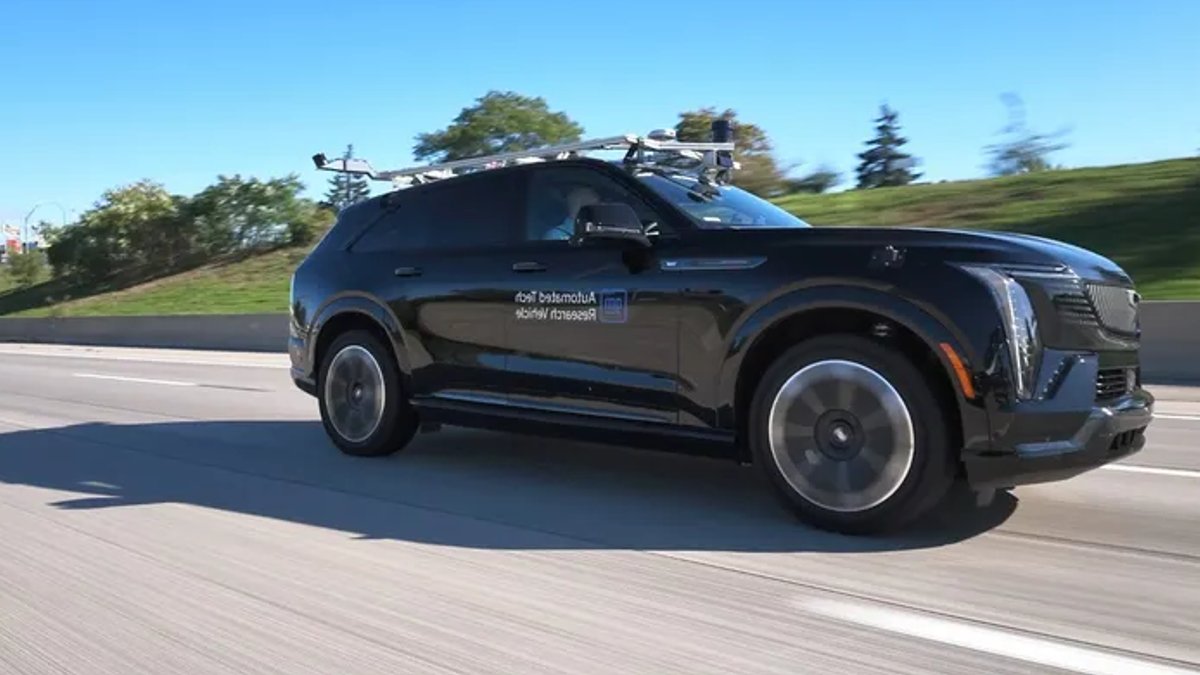
General Motors is advancing its push toward “personal autonomy” by expanding its Super Cruise hands-free highway driving system to more of its highest-volume pickups and SUVs, with a more advanced eyes-off version planned for 2028. The automaker announced the expansion as part of a broader strategy to scale a full autonomous driving stack across its North American lineup.
New Architecture for Autonomous Driving
To support this vision, the company developed a next-generation central compute and zonal electrical architecture, which it describes as a radical departure from traditional automotive electronics. The core of the system is a liquid-cooled central compute unit (CCU) that provides approximately 40 times more compute power than the company’s current vehicles. This unit consolidates autonomy, active safety, chassis and propulsion software onto a single high-speed core, according to the company’s press release. The new architecture decouples a vehicle’s software from its physical hardware layer, a fundamental aspect of software-defined vehicles. This design allows the company to deliver over-the-air updates throughout a vehicle’s service life.
Super Cruise Expansion and Data Collection
The company aims to launch the next-generation Super Cruise with eyes-off technology in 2028, starting with the Cadillac Escalade IQ electric SUV before rolling it out to higher-volume models like the Chevrolet Silverado. Customers using Super Cruise have driven over 1.2 billion hands-free miles across nearly 750,000 vehicles in North America. To process the data required for autonomous driving, the zonal hub and high-speed Ethernet network replaces extensive wiring with an ultra-fast data backbone. This network supports 36 times more data transfer than previous systems, giving vehicles a more complete understanding of their surroundings. The company has built a continuous data flywheel to collect information from customer vehicles, with participation requiring opt-in consent.
Future In-Cabin Vision
Beyond vehicle architecture, GM unveiled “Concept Horizon,” a future in-cabin experience designed to transform the interior into a space for relaxation, work and unwinding. The concept is informed by research into how passengers might utilize autonomous vehicles during longer trips and is built around human needs. The company’s autonomous driving technology stack simulates over 3 billion miles daily at an average speed of 50 mph, equivalent to data from roughly 2.5 million human-driven vehicles per day. Real-world data also comes from the company’s fleet of hundreds of data-collection vehicles, which log approximately 1 million miles of sensor data monthly, including edge cases used to train machine learning models. This data helps refine the system in simulated environments before real-world deployment.