
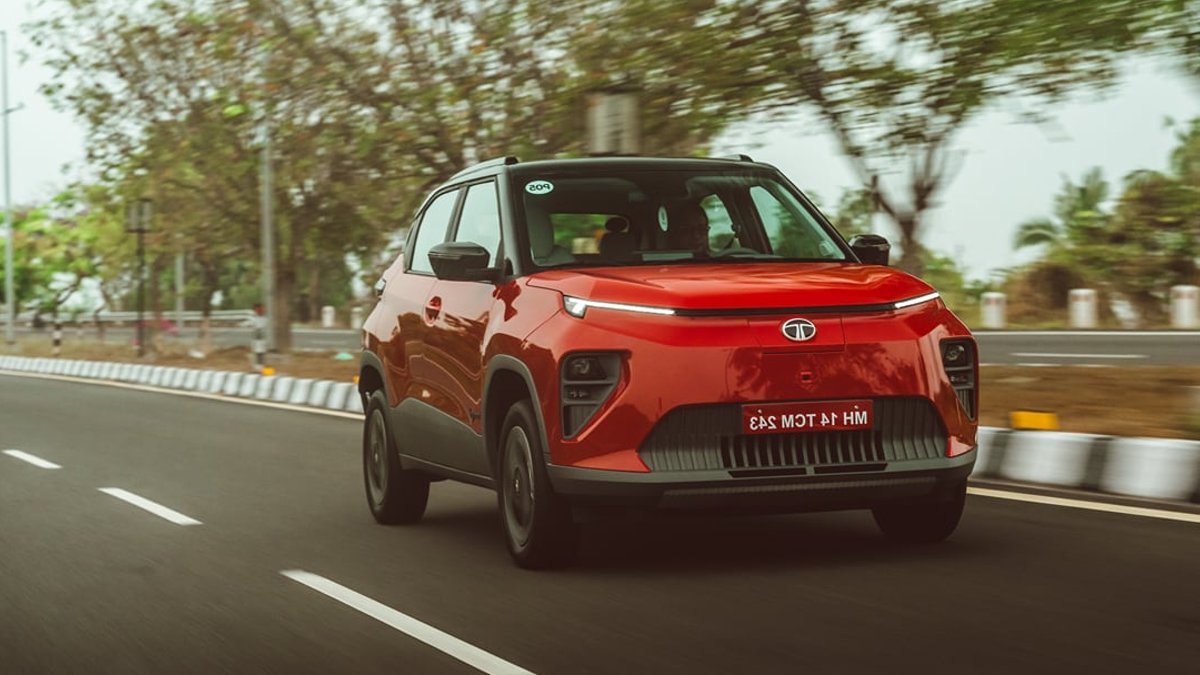
The 2026 Tata Punch EV has received a subtle facelift, with Tata Motors focusing on under-the-skin improvements to enhance its appeal as an entry-level electric vehicle (EV). While the exterior changes are minimal, the Punch EV now boasts a more modern look with a cleaner face, compact lighting housings, and a lighter grey plastic trim.
Styling and Practicality
The side profile remains largely unchanged, except for slightly different alloy wheels and new shades. Despite a larger battery pack, the Punch EV maintains its impressive ground clearance of 195 mm and water wading capacity of 450 mm. The rear features a new full-width light cluster and vertical design elements, while the frunk remains small, suitable for storing the portable charging cable.
The boot space has been increased to 366 liters, capable of accommodating strollers and soft bags. However, the high lip and absence of a 60:40 split are minor drawbacks, and the lack of a spare wheel as standard is a concern.
Interior and Features
The interior of the Tata Punch EV is familiar, retaining the chunky, tough look of the previous model. The use of various materials and textures, including an off-white central band with recycled feel and tri-arrow textures, adds visual interest. However, the hard plastic on the door panels is prone to scuffing, and more soft surfaces would have been welcome.
The 10.25-inch touchscreen is reliable, with crisp display and logical menus, offering a good suite of entertainment options, including wireless Android Auto and Apple CarPlay. You get a good suite of entertainment options and the wireless Android Auto and Apple CarPlay work seamlessly. Unlike the new ICE Punch, you get a full 10.25 inch driver display. It is easy to use on the move, especially the Google Maps projection and the clearer feed from the blind view function, but as before the fonts could be larger.
Read Also: Volkswagen Taigun facelift tested on long journey
Practicality is a strong suit, with a well-laid-out center console, secure wireless charger spot, and large cupholders. The 90-degree doors aid ingress and egress, and the flat floor provides ample legroom for those under 6 feet tall. The backrest offers dense cushioning, ensuring comfort on longer journeys.
One notable improvement is the thigh support, which is almost as good as the ICE Punch, thanks to the extended squab. The Punch EV also features a Type C charger but lacks rear AC vents, although Tata Motors claims improved cooling for both the battery pack and AC.
Performance and Range
The 40 kWh battery pack version offers an ARAI range of 468 km, with Tata claiming a real-world range of up to 355 km. During testing, the car achieved an efficiency of 149 Wh per km or 6.7 km per kWh, resulting in a range of 270 km. The DC fast charging speed has improved.
The new powertrain delivers 130 PS and 154 Nm of torque for the larger battery option, with a claimed 0-100 km/h time of 9 seconds. The Punch EV is easy to drive, with decent visibility and a tight turning radius. Its performance is adequate for city driving and remains strong at higher speeds, making it suitable for longer journeys.
The ride quality is typical of Tata EVs, with some firmness over broken surfaces, but it remains comfortable in the cabin. The low-set EV mass and small footprint provide good body control around corners, although the steering could offer more feedback at the center.
Read Also: JSW Motors Unveils New Brand Logo
The Tata Punch EV is now priced at Rs 12.59 lakh for the top-spec version, making it an attractive option in its segment. The BaaS (Battery as a Service) option further reduces the upfront cost, enhancing its value proposition.
Interior Refinements and Practicality
Panel gaps appear tighter, and sharper plastic edges have been smoothed out, enhancing overall consistency. The 10.25-inch touchscreen remains reliable, with seamless wireless Android Auto and Apple CarPlay integration.
Driving Experience and Value Proposition
While torque is lower than the previous model, Tata claims improved performance and driveability due to a wider peak torque range.
While cabin materials and rear seat space could be better, the Punch EV stands out as a competent everyday EV with sufficient range and features for its segment.