
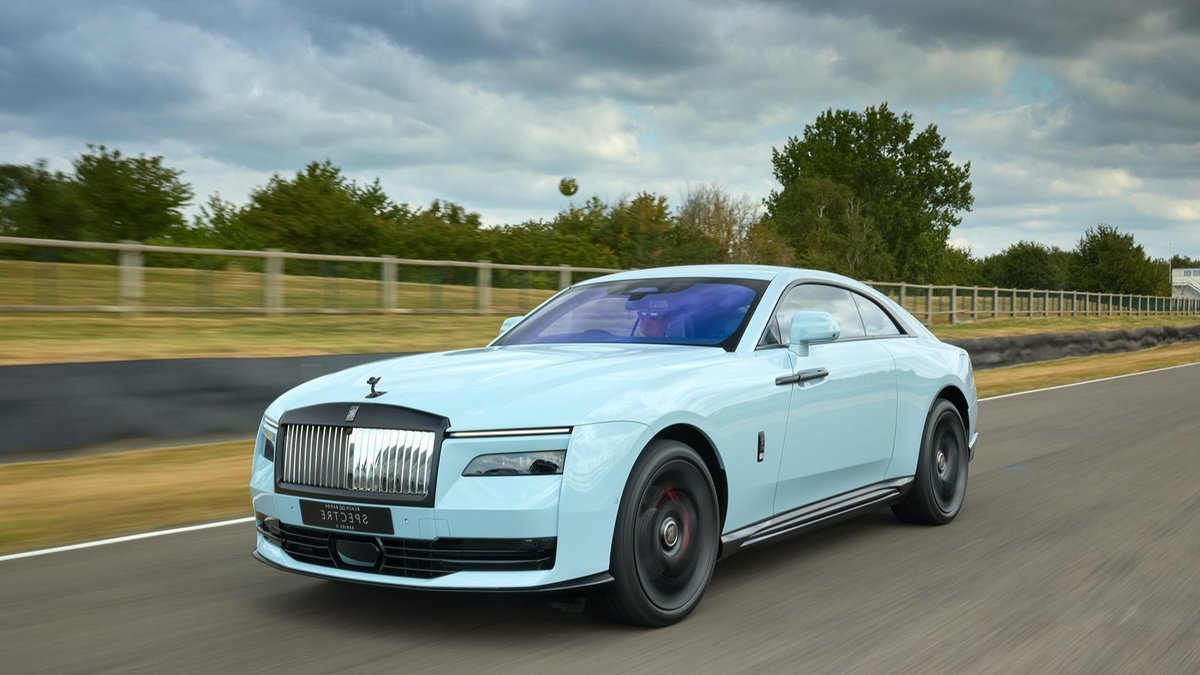
Rolls-Royce’s first electric vehicle has received a mid-life update, with the Spectre Series II gaining more power, a bigger battery and an extended driving range. The British luxury brand took the unusual step of testing the updated coupe on the Goodwood circuit, where journalists were given the opportunity to push the 2.9-tonne vehicle through its paces on track.
The Spectre already proved popular after its launch, becoming the marque’s best-selling model in Europe. For the Series II update, most changes sit beneath the skin rather than on the surface. A new 23-inch forged wheel is the only visual clue to distinguish the updated model from its predecessor.
The battery capacity has increased from 102kWh to 112.4kWh, pushing official range from 329 miles to 390 miles. Peak charging speed now reaches 195kW, reducing a 10-80 percent charge to 28 minutes — six minutes faster than before.
Related: Lamborghini launches £3,000 pushchair for parents
Power and torque have also received a boost. The standard Spectre now produces 600 horsepower and 749lb ft of torque, up from 584hp and 662lb ft. Choosing the Black Badge variant unlocks 680hp and 811lb ft when in Infinity mode, making it the most powerful production Rolls-Royce ever built.
Interior and Design
The cabin maintains Rolls-Royce’s focus on traditional luxury rather than screens and technology. High-quality materials dominate, with new options including a bamboo-based monogrammed fabric called Duality Twill that requires 2.6 million stitches and 10 miles of thread to complete a full interior. A new Brindled Walnut veneer uses eucalyptus fibres leftover from paper production.
Interior space surprises given the coupe body style. Adults sit higher than in typical coupes, almost at SUV altitude, with clear sightlines over the long bonnet. Four adults can travel comfortably, something the Bentley Continental GT cannot claim.
Related: Honda seeks revival with fun new models
Track Performance
Testing occurred at Goodwood Motor Circuit in West Sussex, near the Rolls-Royce factory. The cars were near-production prototypes lacking road registration, which made on-track evaluation necessary rather than optional.
At low speeds, the Spectre’s anti-roll bars automatically disconnect to soften the ride. Above 10mph they firm up, increasing resistance.