
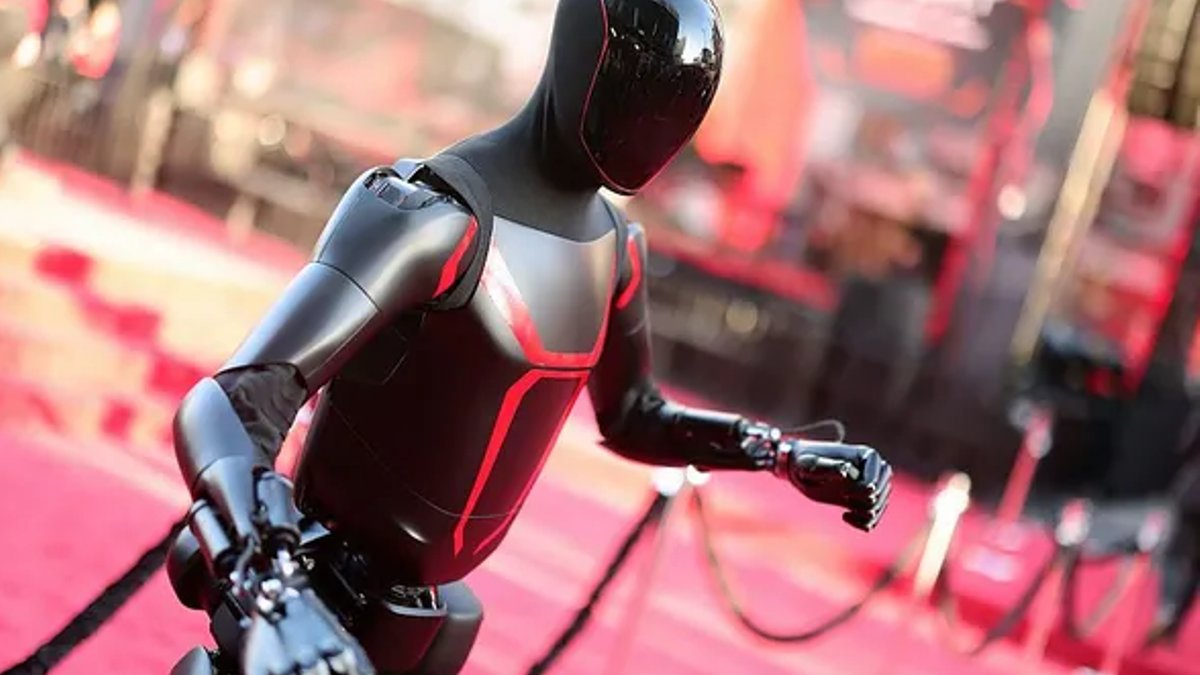
Tesla has entered early production of its Optimus humanoid robot at its Fremont, California facility, with customer shipments expected to commence in the coming year, CEO Elon Musk announced during Tesla’s third quarter earnings call. The automaker has installed the majority of a robotics production line capable of producing 1 million Optimus units annually, though reaching that full capacity may take a year or longer as Tesla refines various production configurations.
Industrial and Consumer Applications
Early Optimus units will be deployed to handle industrial applications, including tasks that are dangerous or repetitive in nature, with consumer availability planned as production scales up. Musk described the robots’ development process as akin to a toddler’s learning journey, noting that they start “wobbly” but gradually improve through practice. Initial deployments could include manufacturing environments where human labor is risky or scarce, allowing workers to focus on more complex responsibilities.
Competitive Robotics Field
Tesla joins other competitors like Toyota and Hyundai in advancing humanoid robotics. Toyota aims to deploy 400,000 robots as part of a $6.4 billion annual investment to automate its assembly lines, using a foundational model trained by observing workers.
Read Also: Hyundai Palisade Hybrid Powertrain Wins for Performance and Efficiency
The primary challenge for robotics firms is collecting data and training autonomous systems for real-world use. While Tesla leverages its fleet of vehicles for self-driving data, Optimus lacks a comparable data stream. To address this, Musk outlined plans for an Optimus Academy involving 10,000 to 20,000 robots that will “self-play” by practicing tasks, generating data to improve decision-making and movement through a “flywheel” effect. This approach will allow the robots to refine their abilities through iterative experience.
Tesla will utilize its Texas Terafab facility to produce AI5 chips, next-generation in-house processors, for Optimus, which will enhance the robot’s computing power. Integration with the new chips is scheduled for April, and Musk indicated a marketing video will soon showcase non-preprogrammed robot behaviors. He predicted competitors would struggle to match Optimus when deliveries begin toward the end of next year, citing the robot’s advanced design and production readiness.
Humanoid robots represent a small but rapidly growing segment of global robotics sales. According to the International Federation of Robotics, nearly 7,000 humanoids were purchased last year, compared to 603,000 total robots added to operations, including industrial arms and warehouse bots. The sector’s growth reflects manufacturers’ efforts to address labor shortages and automate complex tasks traditionally performed by humans.